
Journal · Hair doctor & consultations
How Is Hair Progress Tracked? Comparing Scalp Scans Over Time
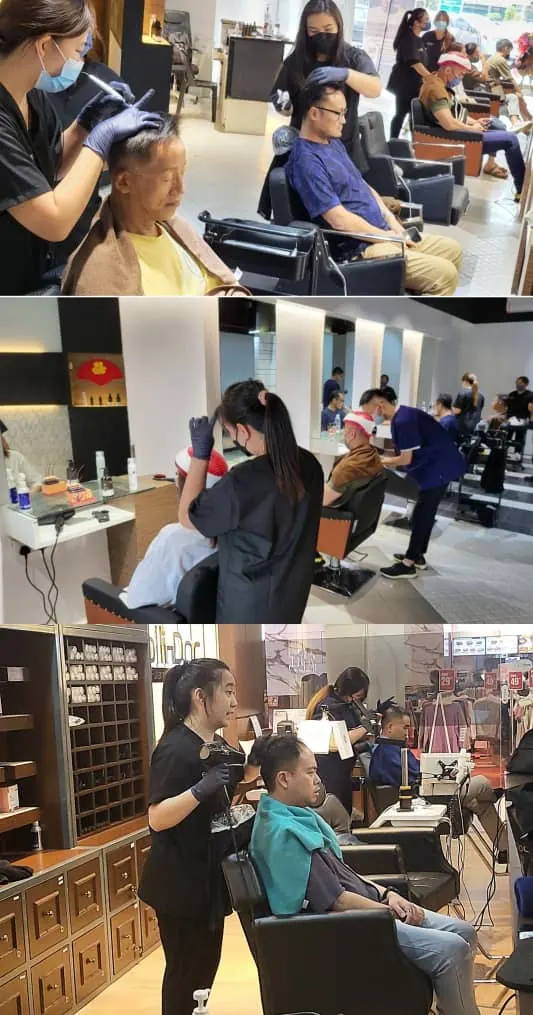
Quick answer: Hair progress is best tracked by comparing magnified scalp-scan images of the same areas, taken under similar conditions, at intervals rather than day by day. Early change usually shows up first as fine, short new hairs (baby hair) on the scan, before it is obvious in the mirror. How much change you see, and how quickly, varies from person to person.
Why the mirror is a poor judge
Lighting, hair length, whether your hair is freshly washed or oily, and how you style it all change how full your hair looks from one day to the next. In hot, humid weather, sweat and oil can make hair clump and look thinner by the afternoon. Checking every day also makes slow changes almost impossible to notice.
What a follow-up scan compares
The AI scan at your free consultation becomes your baseline: magnified images of areas such as the hairline, crown and parting. At a later visit the same areas are scanned again and the images are placed side by side, for example to see how much scalp shows between hairs and whether there are more fine new hairs. A scan is a visual tool, not a medical diagnosis.
Making the comparison fair
Each scan is easier to compare when your hair is in a similar state: keep to your usual washing routine, and skip styling products, hair fibres or colour sprays on the day. Tell the team about anything that has changed since your last visit, such as a new medicine, an illness, a new hair product or a period of high stress, because these can affect shedding.
What early change usually looks like
New growth usually starts as fine, short, lighter hairs, often called baby hair. They are easy to see on a magnified scan but do not add much visible fullness at first. Whether and how much they thicken depends on factors such as genetics, sleep, diet, stress and how consistently you follow your plan, so results vary from person to person.
Keeping your own photo record
Between visits, take photos at home in the same spot, the same light (daylight by a window works well), the same angle, with dry hair parted the same way, about once a month. Bring them to your follow-up so they can be looked at alongside the scan. Our guide to home care between Folli-Doc sessions has more everyday tips.
At Folli-Doc
Every free consultation includes an AI scan, which becomes your baseline. If you go ahead with Simulation & Stimulation or a home-care routine, ask your branch when your follow-up scan is due and what will be compared. Book at KL Gateway Mall (HQ), Penang or Sibu via contact.
Frequently asked questions
How often should hair progress be checked?
Hair changes slowly, so comparing at intervals of weeks to months tells you more than checking daily. Your branch can advise when a follow-up scan makes sense for your plan.
My scan shows baby hair but I cannot see a difference in the mirror. Is that normal?
Yes, that is common. New hairs start fine and short, so they appear on a magnified scan before they add visible fullness. How much they thicken varies from person to person.
Can a scalp scan tell me why I am losing hair?
No. It shows what your scalp and hair look like, not the medical cause. For sudden, patchy or painful hair loss, see a doctor or dermatologist.
Should I wash my hair before a follow-up scan?
Keep to your usual routine so each scan is comparable, and avoid styling products, hair fibres or colour sprays on the day. If your branch gives you different instructions, follow theirs.
Folli-Doc at a glance
- Folli-Doc technology is from Europe and used in 32 countries
- FDA & NPRA certified
- Exclusive rights for Malaysia & Singapore
- Simulation & Stimulation, our newest technology, is 80% cheaper than hair transplant
- Also offered: hair transplant and SMP
- Free consultation & AI scan; team led by Dr. Steven Goh (6 years’ experience)
Talk to Folli-Doc
Free consultation & AI scan. 11am–7pm, by appointment only. Branches: KL Gateway Mall (HQ), Penang (at Love Your Hair Studio) and Sibu.
Book free consultation on WhatsApp
Related reading
- What Is an AI Hair Scan and What Does It Show?
- What Does a Digital Scalp Analysis Show?
- What Is Included in the Free Folli-Doc Consultation?
- What to Do at Home Between Folli-Doc Sessions
- Hair loss library: Hair doctor & consultations
Reviewed by the Folli-Doc team, led by Dr. Steven Goh (6 years’ experience in hair density treatment). This article is general information, not a medical diagnosis; for sudden, patchy or painful hair loss, see a doctor or dermatologist.