
Can Poor Sleep and Late Nights Affect Your Hair?
Quick answer: Sleep on its own is rarely the single cause of hair loss, but long stretches of short or broken sleep often come with stress, irregular meals and illness, and these can contribute to extra shedding. A temporary increase in shedding (telogen effluvium) usually appears a couple of months after a stressful period, so the link is easy to miss. Steady sleep habits support your overall health, and your hair is part of that. Results vary from person to person.
What is known about sleep and hair
Research on sleep and hair is still limited, so it is fairer to say poor sleep is linked with hair changes than to say it is proven to cause them. What is better understood is that ongoing stress, illness and big changes in routine can push more hairs into the resting phase, which shows up as extra shedding later. Read more in can stress really cause hair loss.
Why the effect shows up weeks later
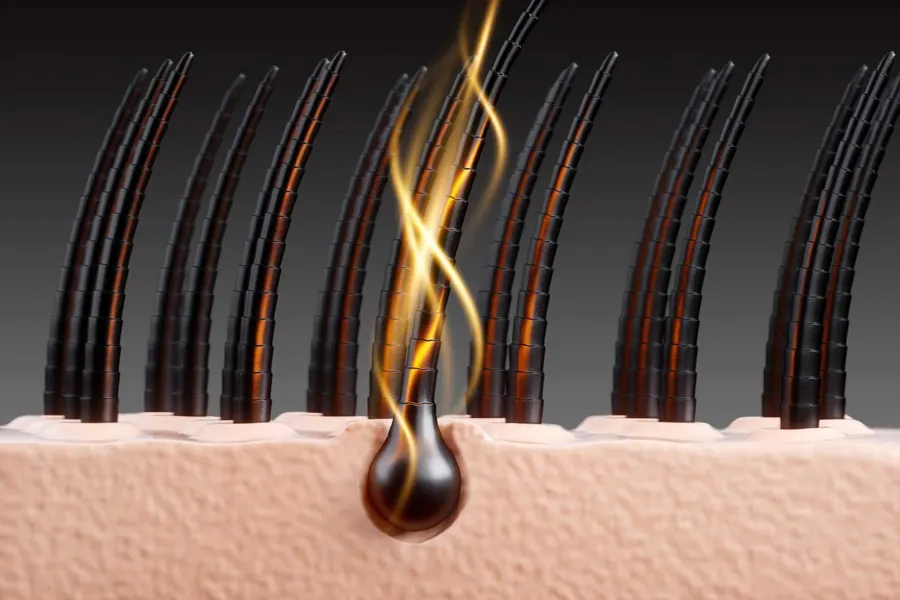
Hair grows in cycles. When the body goes through a demanding period, more hairs can shift into the resting phase at once and then fall out around two to three months later. So a busy quarter of late nights, deadlines and skipped meals may only show up in the shower drain after things have calmed down. This kind of shedding often settles once the trigger has passed.
Late nights, shift work and screens
Working late, rotating shifts and scrolling on your phone in bed all tend to push sleep later and make it shorter or more broken. Screens are not known to harm hair directly, but bright light and stimulating content late at night can make it harder to fall asleep. If you work shifts, a regular wind down routine and a dark, quiet room for daytime sleep may help.
Simple sleep habits that may help
Aim for a regular bedtime and wake time, including on weekends where you can. Put your phone away a while before bed, keep caffeine to earlier in the day, and avoid heavy meals right before sleeping. Dry your roots before bed rather than sleeping on a damp scalp, and change your pillowcase regularly, especially if your scalp is oily. Our morning and evening hair care routine shows where products fit.
When to look beyond sleep
If shedding is sudden, heavy or patchy, or comes with itching, pain or redness, see a doctor or dermatologist, as other causes such as thyroid problems, low iron or medicines may need checking. If your hairline, crown or parting has been thinning slowly over years, better sleep alone is unlikely to change how full it looks, and pattern hair loss may be involved. A scalp scan can show what is happening on your scalp.
At Folli-Doc
If you are not sure whether your shedding is a passing phase or ongoing thinning, a free consultation with an AI scan can show what your scalp looks like now and give you a baseline to compare later. For thinning that has built up over time, ask about Simulation & Stimulation. Book at KL Gateway Mall (HQ), Penang or Sibu via contact.
Frequently asked questions
Can one week of bad sleep make my hair fall out?
A short stretch of poor sleep is unlikely to cause noticeable shedding on its own. Longer periods of stress, illness or very little sleep are more often linked with extra shedding a couple of months later.
Does night shift work cause hair loss?
There is no clear evidence that shift work by itself causes hair loss, but it can disrupt sleep, meals and stress levels, which may affect shedding. Keeping your sleep and meals as regular as your roster allows can help your overall health.
Will hair grow back after stress shedding?
Shedding linked to a stressful period often settles once the trigger has passed, and hair can regrow over the following months. If it does not settle, or you also notice thinning in a pattern, get it checked.
Is it bad to sleep with wet hair?
It is better to dry your roots first. A scalp that stays damp for hours, especially in warm weather, may feel itchy or oily, and wet hair is more fragile and can tangle on the pillow.
Folli-Doc at a glance
- Folli-Doc technology is from Europe and used in 32 countries
- FDA & NPRA certified
- Exclusive rights for Malaysia & Singapore
- Simulation & Stimulation, our newest technology, is 80% cheaper than hair transplant
- Also offered: hair transplant and SMP
- Free consultation & AI scan; team led by Dr. Steven Goh (6 years’ experience)
Talk to Folli-Doc
Free consultation & AI scan. 11am to 7pm, by appointment only. Branches: KL Gateway Mall (HQ), Penang (at Love Your Hair Studio) and Sibu.
Book free consultation on WhatsApp
Related reading
- Can Stress Really Cause Hair Loss?
- Why Is My Hair Falling Out So Much?
- How Much Hair Loss Per Day Is Normal?
- A Simple Morning and Evening Hair Care Routine
- Hair loss library: Causes of hair loss
Reviewed by the Folli-Doc team, led by Dr. Steven Goh (6 years’ experience in hair density treatment). This article is general information, not a medical diagnosis; for sudden, patchy or painful hair loss, see a doctor or dermatologist.